
Your heat pump spends the entire winter outside.
Snow lands on the cabinet. Freezing rain coats exposed surfaces. Wind pushes drifting snow around the outdoor unit. Roof runoff freezes. Ice forms. Debris falls.
Cold-climate heat pumps are built for Canadian winters, but outdoor placement still matters.
Natural Resources Canada recommends checking outdoor heat pumps for excessive snow and ice buildup during winter and clearing the unit when accumulation starts covering the equipment.
For homeowners in New Brunswick, Nova Scotia, Prince Edward Island, Newfoundland and Labrador, and British Columbia, winter exposure changes from one property to the next.
One outdoor unit might sit in a protected area with little accumulation. Another sits below a roof edge where snow, ice and freezing rain hit the equipment throughout the season.
That is where a purpose-built heat pump snow cover earns its place.
Greenfoot Energy offers Canadian-made heat pump snow covers designed to protect outdoor units from snow, ice and debris without wrapping the equipment inside an enclosure.
What Does a Heat Pump Snow Cover Do?
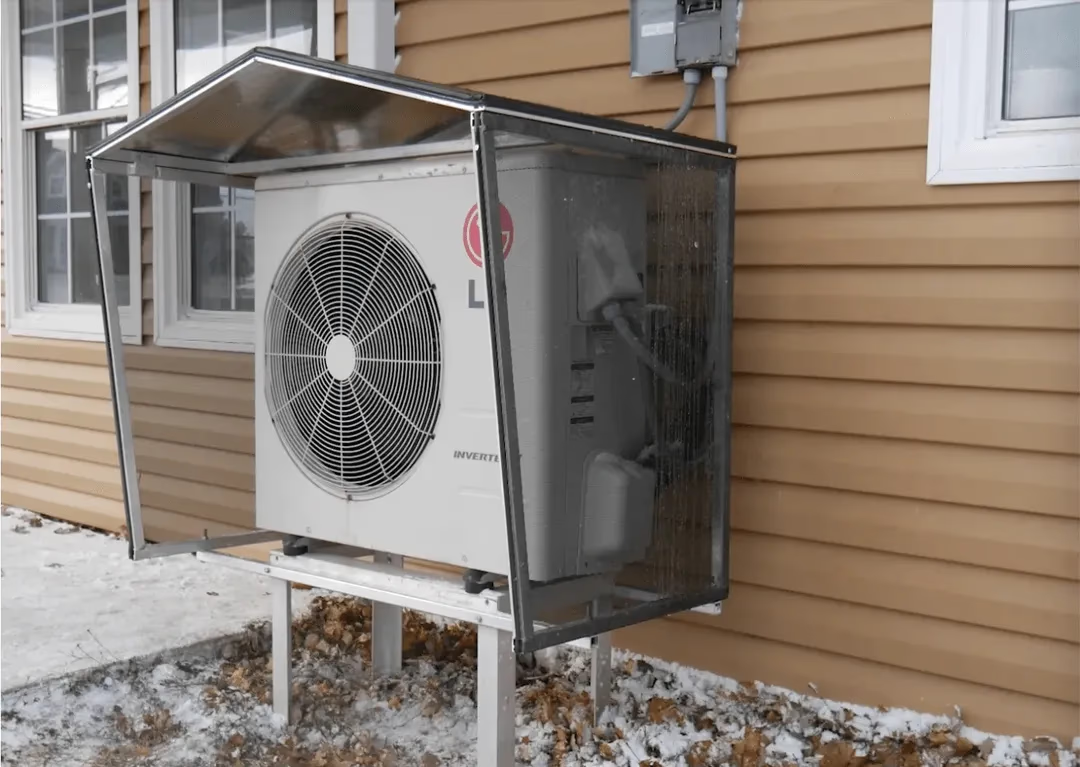
A heat pump snow cover sits above the outdoor unit and gives falling snow, ice and debris another surface to hit.
The sides of the heat pump stay open.
That matters because an air-source heat pump depends on outside air.
During winter, the outdoor unit extracts heat from the air and transfers that heat into your home. Natural Resources Canada explains how air-source heat pumps move heat between indoor and outdoor air.
A snow cover is meant to protect the equipment from above while leaving the heat pump free to move air through the outdoor coil.
Greenfoot's snow covers are designed to help with:
- Snow and ice accumulation
- Falling debris
- Roof runoff
- Ice forming above the outdoor unit
- Blocked airflow caused by overhead accumulation
- Repeated winter clearing around exposed installations
Why Snow Around Your Heat Pump Matters
Some frost on an outdoor heat-pump coil is normal.
Heat pumps expect frost during cold weather and use a defrost cycle to remove the buildup.
Natural Resources Canada explains that frost forms on the outdoor coil when moisture in the air freezes. As frost builds, the heat pump periodically enters defrost mode.
Deep snow around the cabinet is a different problem.
So is packed snow against the outdoor coil.
A defrost cycle handles frost formed during normal operation. The system does not dig itself out of a snowbank.
That is why NRCan recommends keeping excessive snow and ice away from the outdoor unit throughout winter.
A properly designed snow cover helps reduce the amount of snow reaching the top of the equipment in the first place.
Your Heat Pump Still Needs Airflow
This is the most important part of winter protection.
The goal is protection from above, not enclosure.
Your outdoor unit needs open space around the areas responsible for moving air.
Problems start when homeowners try to protect a heat pump using the wrong approach.
Avoid:
- Wrapping the outdoor unit in a tarp
- Using a tight vinyl cover while the heat pump operates
- Building a small plywood box around the equipment
- Stacking items beside the outdoor coil
- Allowing drifting snow to pack tightly around the cabinet
A purpose-built snow cover works differently.
The protective structure stays above the heat pump. The equipment remains open around the sides.
Greenfoot specifically designed its heat pump snow covers around winter protection while keeping the outdoor unit accessible.
Roof Snow and Falling Ice Deserve More Attention
Look at your outdoor unit.
Then look directly above the equipment.
Where does your roof end?
Where does melting snow drain?
Where do icicles form?
Where does snow go when a large section releases from the roof?
A heat pump below a roof edge deals with more than snow falling from the sky.
Snow accumulates on the roof, warms, shifts and releases. Meltwater reaches the edge and freezes. Ice breaks away. Debris also falls from gutters, trees and surrounding structures.
A snow cover creates a barrier above the heat pump.
Instead of falling material hitting the top of the outdoor unit directly, the cover takes much of the exposure.
This is one of the strongest reasons to add a cover to an exposed installation.
Freezing Rain Creates Another Problem
Atlantic Canadian winters often move back and forth around freezing.
Snow turns to rain. Water freezes. Temperatures rise. Everything melts. Temperatures drop again.
British Columbia has its own regional mix. Coastal communities deal with wetter winter conditions, while interior areas receive colder temperatures and heavier snowfall.
The weather changes by region, but the basic need stays the same.
The outdoor unit needs space around the coil, good drainage and protection from excessive snow and ice.
NRCan advises homeowners to keep excessive ice and snow away from outdoor heat-pump units.
A snow cover reduces direct precipitation reaching the top of the equipment and adds another layer of protection during repeated freeze and thaw cycles.
Wind-Driven Snow Still Needs Attention
Snow rarely falls straight down during a major storm.
Wind pushes snow into corners, against walls and around outdoor equipment.
A heat pump that looks completely clear in the morning might have a large drift beside the cabinet several hours later.
A top cover does not stop drifting snow.
You still need to inspect the area around the outdoor unit after a major storm.
The cover solves a more specific problem. Snow, ice and debris coming from above hit the cover before reaching the equipment.
Good winter protection starts with the whole outdoor installation.
A Heat Pump Stand and Snow Cover Do Different Jobs
These two products solve different problems.
The Stand Protects From Below
A proper stand raises the outdoor unit above ground-level snow accumulation.
Elevation also leaves more room below the equipment for drainage during winter operation.
During defrost, melted frost leaves the outdoor coil as water. That water needs somewhere to drain.
A low-mounted unit surrounded by snow has less room underneath for drainage and clearance.
The Snow Cover Protects From Above
The snow cover handles falling snow, ice, freezing rain and debris.
Together, a properly elevated unit and an overhead cover address two different exposure points.
Greenfoot manufactures both types of equipment. Greenfoot also fabricates heat pump stands and snow covers through its Atlantic Canadian operation.
Made in Canada for Canadian Conditions
Greenfoot's snow-cover line is made in Canada.
Across Greenfoot's Atlantic operations, the covers are fabricated in-house before being distributed to branches serving New Brunswick, Nova Scotia, Prince Edward Island, and Newfoundland and Labrador.
The same Canadian-made product line supports Greenfoot customers in British Columbia.
That matters because these covers are being supplied by the same organization installing and servicing heat pumps in Canadian winter conditions every day.
You can view the current Greenfoot heat pump snow cover options here.
Who Should Consider a Heat Pump Snow Cover?
A snow cover makes more sense on some homes than others.
Take a closer look at your installation if:
- Your heat pump sits directly below a roof edge
- Snow regularly accumulates on top of the outdoor unit
- Icicles form above or beside the equipment
- Your property receives frequent freezing rain
- Snow slides from the roof toward the heat pump
- Wind creates deep drifts around the unit
- You clear snow from the top several times each winter
- Branches, leaves or other debris regularly land on the cabinet
- The outdoor unit sits in a highly exposed area
- Winter storms repeatedly bury or partially cover the equipment
Those conditions create a stronger case for overhead protection.
Who Might Not Need One?
Not every outdoor heat pump needs a snow cover.
Some installations already have excellent natural protection.
Your unit might sit beneath an existing overhang with suitable clearance.
The heat pump might be positioned far away from roof runoff and falling ice.
The equipment might also sit high enough above local snow accumulation in an area with little drifting.
If your outdoor unit stays clear throughout winter without repeated snow or ice buildup, the benefit of adding a cover is smaller.
The decision should follow the installation, not a blanket rule.
Does a Snow Cover Make a Heat Pump More Efficient?
A snow cover does not change the official efficiency rating of your heat pump.
The value comes from helping protect the operating area around the outdoor unit.
NRCan explains that frost on the outdoor coil reduces heat transfer until the system enters defrost mode.
NRCan also advises homeowners to remove excessive snow and ice when accumulation begins covering the outdoor unit.
Keeping the equipment clear helps the system operate under the conditions the heat pump was designed around.
That is different from promising a specific percentage reduction in electricity use.
Does a Snow Cover Help Protect the Equipment?
Yes.
The benefit is easy to understand.
Without overhead protection, falling material reaches the outdoor cabinet directly.
That includes:
- Snow
- Ice
- Freezing rain
- Roof runoff
- Leaves
- Small branches
- Other debris
A cover creates a physical barrier above the heat pump.
Greenfoot's Canadian-made snow covers are designed to reduce exposure to snow, ice and debris while helping prevent overhead accumulation from reaching the equipment.
A cover does not make the heat pump indestructible.
Heavy roof snow, damaged trees and unsafe ice conditions still need attention.
Winter Maintenance Still Matters
A snow cover does not eliminate winter maintenance.
You should still take a quick look at your outdoor unit after a major storm.
Natural Resources Canada recommends checking for excessive snow and ice buildup during winter.
Check:
- Snow around the base
- Open space around the outdoor coil
- Ice buildup
- Drainage below the equipment
- Large snow drifts
- Heavy accumulation on the snow cover
- Unusual noises or operation
The cover reduces overhead exposure. A quick inspection after major storms handles the rest.
What Size Heat Pump Snow Cover Do You Need?
Greenfoot offers multiple snow-cover sizes for different outdoor heat-pump configurations.
Small Heat Pump Snow Cover
Model: SCS382828
Maximum equipment fit: 30 inches wide by 28 inches high
Cover dimensions: 38 by 28 by 28 inches
This size works with many smaller mini-split outdoor units.
Large Heat Pump Snow Cover
Model: SCL463428
Maximum equipment fit: 38 inches wide by 32 inches high
Cover dimensions: 46 by 34 by 28 inches
This option supports many medium and larger mini-split outdoor units.
X-Large Heat Pump Snow Cover
Model: SCXL464428
Maximum equipment fit: 30 inches wide by 42 inches high
Cover dimensions: 46 by 44 by 28 inches
This larger configuration supports many side-discharge central heat-pump installations.
Do not choose a cover using BTU capacity alone.
The physical dimensions of your outdoor unit matter.
Greenfoot can help match the correct snow cover to your heat pump.
Are Heat Pump Snow Covers Worth It?
For the right installation, yes.
The strongest case exists when your outdoor unit repeatedly deals with snow and ice coming from above.
A heat pump directly below a roof edge is a good example.
So is a unit that collects heavy snow after every storm or sits in an area exposed to freezing rain and falling debris.
If your heat pump already sits in a protected location and stays clear throughout winter, the benefit is smaller.
Look at what happens around your equipment during an actual storm.
If you repeatedly clear snow, remove ice or worry about material falling from the roof, a purpose-built cover addresses a real problem.
Questions to Ask Before Adding a Snow Cover
- What are the exact dimensions of my outdoor unit?
- Does snow or ice fall from the roof above the equipment?
- Does snow regularly collect on top of the cabinet?
- Does the unit stay clear around the sides during winter?
- Is the heat pump mounted high enough above normal snow accumulation?
- Does defrost water drain freely underneath?
- Which snow-cover size fits the equipment?
- Will the cover leave suitable access for service?
- Would the installation benefit from a stand, a cover or both?
Greenfoot's technicians work with heat pumps, stands and snow covers as one outdoor system. That makes the protection easier to evaluate as part of the full installation rather than as a separate accessory.
Heat Pump Snow Cover FAQs
Do heat pumps need snow covers in Canada?
No. A snow cover offers the most value when the outdoor unit faces repeated falling snow, freezing rain, ice, roof runoff or debris. Natural Resources Canada recommends keeping excessive snow and ice away from outdoor heat pumps during winter.
Should I cover my heat pump in winter?
Do not wrap an operating heat pump in a tarp or tight seasonal cover. Air-source heat pumps depend on outside air. Use a purpose-built overhead cover designed to protect the equipment while leaving the outdoor unit open.
Will a heat pump snow cover block airflow?
A properly sized overhead cover sits above the equipment rather than surrounding the outdoor unit. The heat pump still needs open space for airflow and service access.
Does snow damage a heat pump?
Normal frost is part of winter operation. Excessive snow and ice covering the outdoor unit creates a different problem. NRCan recommends removing heavy accumulation so the heat pump remains clear.
Does a snow cover replace a heat pump stand?
No. A cover protects from above. A stand raises the outdoor unit away from ground-level accumulation and creates additional space for drainage.
Are Greenfoot heat pump snow covers made in Canada?
Yes. Greenfoot's snow-cover line is made in Canada, with snow covers for its Atlantic operations fabricated through Greenfoot's Atlantic Canadian operation.
Protect Your Heat Pump Before the Next Heavy Snowfall
Your heat pump does not need to be sealed away from winter.
It needs open airflow, proper elevation, good drainage and protection where the installation is exposed to falling snow and ice.
If your outdoor unit sits below a roof edge, collects snow after storms or deals with repeated freezing rain, adding a purpose-built cover is worth considering.
View Greenfoot Energy's Canadian-made heat pump snow covers and find the right size for your system.