
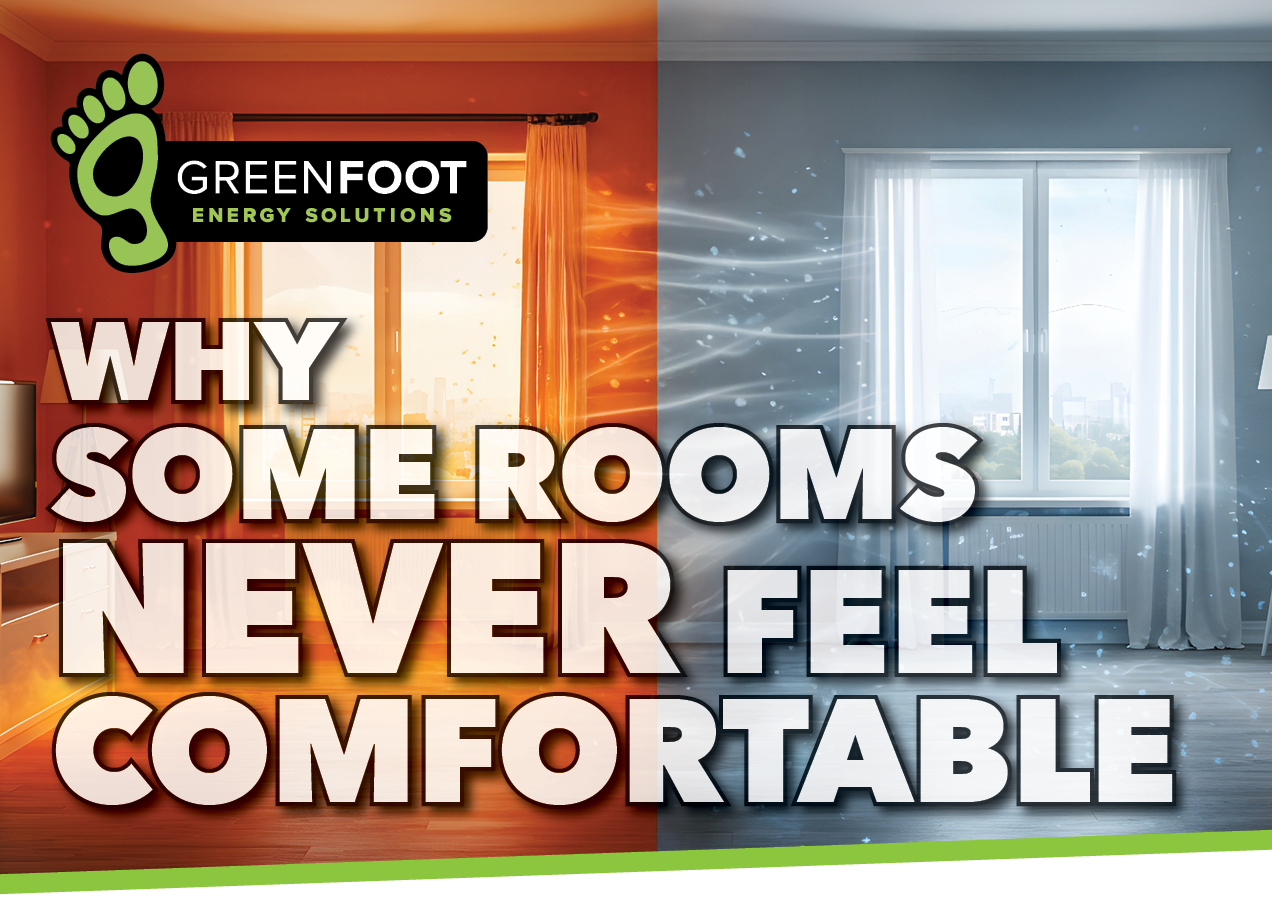
If you've ever walked from one room in your house to another and felt a sudden temperature change, you're not alone.
Many homeowners deal with a bedroom that's always too cold in the winter, an upstairs office that overheats in the summer, or a basement that never quite reaches the same comfort level as the rest of the home.
Naturally, most people assume the heating or cooling system is failing.
But in many cases, the issue has nothing to do with the equipment itself.
The real cause is often the way the home handles heat, airflow, and insulation, also known as the building envelope.
What Is the Building Envelope and Why Does It Matter?
When most people think about HVAC systems, they think about equipment: heat pumps, furnaces, thermostats, or air conditioners.
But true comfort begins with something more fundamental, the building envelope, the physical barrier between your home's interior and the outside environment.
This includes:
- Insulation in walls, ceilings, and floors
- Windows and doors
- Air sealing and drafts
- Roofing materials
- Construction design and orientation
The building envelope controls how heat enters and leaves your home. If it is poorly insulated or unevenly sealed, even the most advanced heating and cooling systems will struggle to maintain balanced temperatures.
What Is a Heat Gain and Heat Loss Analysis?
A heat gain/loss calculation evaluates how your home gains heat in the summer and loses heat in the winter. Instead of guessing, technicians use building-science principles to calculate how much heating or cooling each room actually needs.
This analysis considers factors such as:
- Insulation levels
- Window size and efficiency
- Sun exposure
- Air leakage
- Ceiling height and room size
- Building orientation
- Occupancy and appliance heat
When this calculation isn't performed, HVAC systems are often oversized, undersized, or poorly balanced, leading to uneven temperatures throughout the home.
Why Are Some Rooms Always Hot or Cold?
There are several common reasons why certain rooms never feel comfortable. Most of them are related to airflow, insulation, or building design rather than the HVAC equipment itself.
1. Airflow Imbalances
Your HVAC system distributes heating and cooling through ducts and vents. If airflow is restricted or poorly balanced, some rooms will receive less conditioned air than others.
This can happen due to:
- Poorly designed duct systems
- Long duct runs
- Blocked or undersized vents
- Renovations or additions that were never rebalanced
2. Poor Insulation
Insulation slows down the transfer of heat through walls, ceilings, and floors. If one area of a home has less insulation, such as a room above a garage or a newer addition, heat can escape much faster during winter or enter more easily during summer.
3. Solar Heat Gain
Rooms that receive significant sunlight during the day can absorb a large amount of heat through windows. South- and west-facing rooms often experience this issue, especially if they have large windows or minimal shading.
4. Stack Effect in Multi-Level Homes
Warm air naturally rises while cooler air sinks. In multi-story homes, this phenomenon, known as the stack effect, can cause upper floors to become significantly warmer than lower levels.
5. Aging or Poorly Designed Ductwork
Many homes have duct systems that were installed decades ago, often designed for older heating equipment. Modern high-efficiency heat pumps and HVAC systems move air differently, and older duct designs may not distribute airflow effectively.
Why Replacing the HVAC System Often Doesn't Fix the Problem
When homeowners complain about uncomfortable rooms, the most common suggestion they receive is to replace the heating or cooling system.
While this can sometimes help, it often fails to address the underlying problem.
If the real issue is insulation, airflow imbalance, or duct design, installing a new system simply repeats the same problem with newer equipment. That's why a building-science approach is so important.
How Does Greenfoot Solve Uneven Home Temperatures?
At Greenfoot Energy Solutions, improving home comfort begins with understanding how the building and HVAC system work together.
This typically includes:
- Evaluating the building envelope
- Performing heat gain and heat loss calculations
- Analyzing airflow and duct performance
- Identifying insulation gaps
- Assessing air leakage and drafts
From there, targeted solutions can be designed, including:
- Airflow balancing
- Duct adjustments or redesign
- Improved insulation
- Air sealing upgrades
- HVAC zoning systems
- System optimization or right-sizing
In many cases, these adjustments can dramatically improve comfort without replacing the entire HVAC system.
What Is HVAC Zoning and How Does It Help?
For homes with multiple floors or varying sun exposure, HVAC zoning systems can help maintain balanced temperatures.
Zoning divides the home into separate areas that can be controlled independently. Each zone can receive the heating or cooling it needs without affecting other parts of the house.
This allows homeowners to maintain consistent comfort across bedrooms, living spaces, basements, and upper floors.
The Goal: Consistent Comfort in Every Room
A properly designed HVAC system should not create hot and cold spots throughout the house. Instead, every room should maintain stable temperatures year-round.
When the building envelope, airflow, and insulation are addressed together, homeowners experience:
- More consistent temperatures
- Improved energy efficiency
- Lower heating and cooling costs
- Better indoor comfort year-round
Frequently Asked Questions
Why is one room in my house always colder than the rest?
A room may feel colder due to poor airflow, insufficient insulation, air leaks, or its location in the home. Rooms above garages, far from the HVAC system, or exposed to outdoor walls often lose heat faster than other areas.
Why is one room in my house always hotter than the others?
Rooms that receive more sunlight or have poor airflow often become warmer than the rest of the home. Upper floors in multi-level homes also tend to trap heat due to the natural movement of warm air rising.
Can HVAC zoning fix uneven temperatures?
Yes. HVAC zoning systems divide a home into multiple climate-controlled areas, allowing each zone to receive the heating or cooling it needs. Zoning can significantly improve comfort in homes with multiple levels or varying sun exposure.
Does replacing my HVAC system fix uneven room temperatures?
Not always. If the root cause is insulation, airflow imbalance, or duct design, replacing the system may not solve the problem. A building envelope and heat loss analysis should be performed before upgrading equipment.
What is a heat gain and heat loss analysis?
A heat gain and heat loss analysis calculates how much heating and cooling each room in a home requires. It evaluates insulation, windows, sun exposure, airflow, and other factors to determine the proper system design.
Book a Home Comfort Review
If some rooms in your home never feel comfortable, the issue may not be your HVAC system at all. A proper evaluation of the building envelope, airflow, and heat gain/loss can reveal the real causes of uneven temperatures.
Book Your Free Review